When a child learns that a friend is thinking of harming themselves, it can shake their sense of safety and leave them worried, sad, or confused.
As parents and carers, your support during this time can make a significant difference to your child’s resilience. Research shows that increasing social support is linked to reducing suicidal thoughts. Now is the time to make every opportunity to connect with your child.
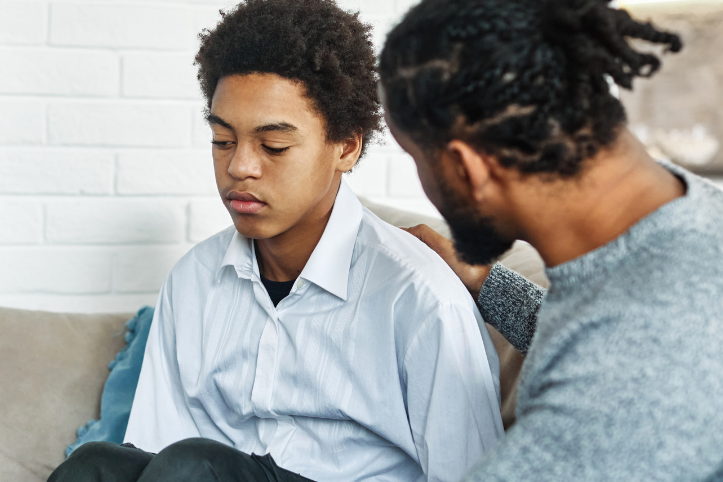
What can parents expect?
Your child may respond in unexpected ways
Some young people become quiet or withdrawn, while others may seem unaffected on the surface. Both can be normal reactions. Their emotions may come in waves: shock, guilt, sadness, fear, anger, or numbness.
Your child may worry silently
Young people often avoid 'burdening' adults or fear about saying the wrong thing. They might be scared for their friend, unsure how to help, or worried about losing friendships if they speak up.
They might hold information tightly
Your child may have been told not to tell adults. Reassure them that when someone is hurting, it is okay, and necessary, to seek help from a trusted adult. With professional help, the right support can be found even when their friend may have lost hope.
Safety is important, even if your child says they're fine
Hearing about a friend’s situation can heighten a young person’s own stress levels or bring up past experiences. It’s important to keep an eye on sleep changes, appetite shifts, withdrawing from activities, declining school attendance, or expressions of hopelessness.

What can you do?
Start with gentle curiosity
You could say things along the lines of...
“I heard about what happened at school. How are you feeling about it?”
“It must be a lot to take in. I’m here to listen whenever you want to talk. Talking to safe adults can be helpful to make sense of things and work through hard feelings”
Validate their feelings
Let them know that whatever they're feeling is understandable.
“It makes sense if you’re feeling upset or confused. Anyone would or everyone is.”
Explain that they are not responsible for their friend's feelings or choices
Children and teenagers often feel guilt. You can reassure them by saying...
“You care about your friend deeply, but their safety is the responsibility of adults and professionals, not you.”
Talk about safe boundaries
Parents can explain to their child that being a good friend doesn’t mean fixing every problem. A supportive friend...
- listens
- shows kindness
- encourages their friend to talk to a trusted adult
- checks in without feeling responsible for the other person’s choices.
Remind them that it becomes unhealthy when a child starts to feel...
- responsible for their friend’s safety
- guilty if their friend is sad, upset, or struggling
- pressured to keep secrets about things that worry them
- that they can’t switch off or have their own space
- anxious or distressed about what might happen if they’re not available 24/7.
Parents can say...
“Friends support each other by being kind, but adults keep people safe. That’s a grown-up job!”
“It’s okay to step back, and it’s always okay to get help from adults. You’re not letting your friend down - you’re actually keeping them safer.”
Know that it's okay to be concerned about your child
If your child expresses hopelessness, talks about wanting to disappear, shows sudden behaviour changes, or you have a gut feeling something isn’t right, reach out for support early.
Encourage your child to speak with Kids Helpline on 1800 55 1800. For parents and carers, you can call Parent Line NSW on 1300 1300 52 for free, and confidential support.
Your child doesn’t have to navigate this alone, and neither do you.